If you own a Nissan Altima and your car won't start, the battery is often the first thing you check. But before you rush out and buy a replacement, you need to know the right battery group size for your specific model year. Picking the wrong one can lead to a battery that doesn't fit the tray, doesn't line up with the terminal posts, or doesn't deliver enough power. Getting this detail right from the start saves you time, money, and the frustration of returning a battery that won't work in your car.
What Does Battery Group Size Actually Mean?
Battery group size is a standard set by the Battery Council International (BCI). It defines the physical dimensions, terminal placement, and power configuration of a car battery. The "group number" is a code like 35, 24F, or 48 that tells you the length, width, height, and where the positive and negative terminals sit. It doesn't tell you the battery's quality or capacity on its own, but it ensures the battery fits your vehicle's tray and cable connections correctly.
Think of it like shoe size. A size 10 shoe might come from different brands with different features, but the size ensures it fits your foot. Battery group size works the same way for your Altima.
What Is the Correct Battery Group Size for a Nissan Altima?
The group size depends on your Altima's model year and engine type. Here's a breakdown by generation:
- 2002–2006 Nissan Altima (2.5L and 3.5L): BCI Group 35
- 2007–2012 Nissan Altima (2.5L and 3.5L): BCI Group 35
- 2013–2018 Nissan Altima (2.5L and 3.5L): BCI Group 35
- 2019–2024 Nissan Altima (2.5L and 2.0L VC-Turbo): BCI Group 35
Most Nissan Altima model years use a Group 35 battery. This is one of the most common sizes in Japanese sedans. The Group 35 measures approximately 9.06 inches long, 6.88 inches wide, and 8.75 inches tall, with the positive terminal on the right side.
If you own a 2005 Nissan Altima and need seasonal guidance, group size 35 is what you'll need year-round, but cold-weather performance specs may vary by brand.
What Happens If You Install the Wrong Group Size?
Installing a battery with the wrong group size creates real problems:
- Physical fit issues: A battery that's too large won't sit in the tray. One that's too small may slide around and damage cables or connections.
- Terminal polarity mismatch: Some group sizes place the positive terminal on the opposite side. If the cables don't reach, you can't connect the battery safely or worse, you might cross the cables and cause an electrical short.
- Power delivery problems: A smaller group size might not provide enough cold cranking amps (CCA) to start your engine in cold weather.
- Warranty issues: Using a non-recommended group size can void your battery warranty and may affect your vehicle's electrical warranty coverage.
How Do You Find Your Altima's Battery Group Size?
There are a few reliable ways to confirm the correct group size:
- Check the owner's manual. Your Nissan owner's manual lists the recommended battery group size in the specifications section.
- Look at the old battery. The group number is printed on the battery label. If it says "35," that's your group size.
- Use an online lookup tool. Most battery retailer websites let you enter your year, make, and model to find the right fit.
- Measure the battery tray. If the label is worn off, measure the tray dimensions and compare them to BCI group size charts.
For a hands-on approach, you can identify the battery group size yourself with a few basic tools and a quick visual inspection.
What Cold Cranking Amps Should a Group 35 Battery Have?
Group size tells you the fit, but cold cranking amps (CCA) tell you the starting power. For a Nissan Altima with a 2.5L four-cylinder engine, aim for at least 640 CCA. For the 3.5L V6, look for batteries rated at 700 CCA or higher.
CCA measures how many amps a battery can deliver at 0°F for 30 seconds while maintaining at least 7.2 volts. If you live in a cold climate, going higher than the minimum CCA gives you more reliable starts on freezing mornings.
Can You Use a Different Group Size Than Recommended?
Generally, no. The BCI group size is matched to your Altima's battery tray, hold-down bracket, and cable length. Swapping to a different group size usually requires modifications to the tray or cables, which introduces risk. Stick with Group 35 unless a qualified mechanic confirms an alternative fits safely.
Some owners wonder about upgrading to a larger battery for more power. While it's technically possible in some vehicles, the Altima's engine bay doesn't leave much room for a bigger battery without custom brackets.
How Long Does a Group 35 Battery Last in an Altima?
A quality Group 35 battery typically lasts 3 to 5 years in a Nissan Altima. Several factors shorten or extend that lifespan:
- Climate: Extreme heat accelerates battery degradation. Batteries in Arizona or Texas often die sooner than those in moderate climates.
- Driving habits: Short trips don't give the alternator enough time to fully recharge the battery. Regular highway driving helps maintain charge.
- Electrical load: Aftermarket audio systems, dash cameras, or phone chargers plugged in while the engine is off drain the battery over time.
- Battery quality: Premium batteries with higher reserve capacity and better internal components tend to last longer.
What Are the Best Group 35 Batteries for the Nissan Altima?
Here are a few well-reviewed options that fit the Altima's Group 35 requirement:
- Interstate MTZ-35: Known for solid CCA ratings and a 36-month free replacement warranty.
- ACDelco 35AGM: An AGM (absorbed glass mat) battery with longer life and better vibration resistance.
- Optima RedTop 35: Popular for high starting power and spill-proof design, though it comes at a higher price point.
- DieHard Platinum AGM Group 35: Strong CCA performance and good cold-weather reliability.
AGM batteries cost more upfront but handle deep discharges and vibration better than traditional flooded lead-acid batteries. If you drive in harsh conditions or use accessories while the engine is off, AGM is worth the extra cost.
What Are Common Mistakes When Replacing an Altima Battery?
- Ignoring the group size and only looking at CCA. A high-CCA battery in the wrong group size won't fit. Always confirm group size first.
- Not checking terminal orientation. Even within Group 35, most batteries match, but double-check that positive is on the right side when facing the battery.
- Forgetting to register the battery. Some newer Altima models (2019+) benefit from having the battery registered through the ECU so the charging system adjusts properly.
- Skipping the hold-down bracket. A loose battery can shift during driving, damaging terminals and internal plates.
- Buying based on price alone. The cheapest battery might leave you stranded sooner. Balance cost with warranty length and CCA rating.
If you're replacing the battery yourself, this installation guide walks you through the process step by step so you don't miss anything.
Quick Checklist Before You Buy a Replacement Battery
- ✅ Confirm your Altima's model year and engine size
- ✅ Verify the group size is BCI Group 35
- ✅ Check the CCA rating meets or exceeds 640 CCA (2.5L) or 700 CCA (3.5L)
- ✅ Decide between flooded lead-acid and AGM based on your driving conditions
- ✅ Compare warranty terms look for at least 24 months of free replacement
- ✅ Inspect terminal orientation (positive on the right when facing the battery)
- ✅ Bring your old battery to the store for a core charge refund (usually $10–$20)
Keep this checklist handy the next time you're at an auto parts store. Knowing your group size ahead of time means you'll walk out with the right battery on the first trip no returns, no guesswork.
For those interested in creative projects and custom graphics for car enthusiast blogs or garage signage, you might find the Montserrat typeface a clean, readable choice.
 Nissan Altima Battery Group Size Identification Guide Diy
 Nissan Altima Battery Group Size Guide for Cold Winter Weather
 Nissan Altima Battery Group Size Purchase & Install Guide
 Nissan Altima Battery Size and Replacement Instructions Guide
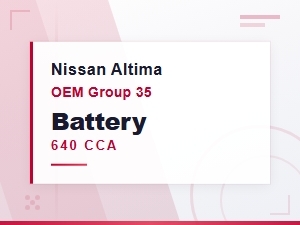 Nissan Altima Oem Battery Group Size and Cca Rating Guide
 Compatible Battery Group Size for 2005 Nissan Altima – Find the Right Fit