If you live somewhere with brutal summers think Phoenix, Dallas, or Miami and you drive a Nissan Altima, your battery is under more stress than you might realize. Heat is the number one killer of car batteries, and picking the wrong Nissan Altima battery group size for hot climate driving can leave you stranded in a parking lot with a dead engine and sweat dripping down your back. The right group size isn't just about fitting the battery tray. It's about choosing a battery that can handle extreme under-hood temperatures, hold its charge through long hot stretches, and deliver reliable starts when your engine is heat-soaked after sitting in the sun for hours.
This article breaks down exactly what group size you need, why hot climates demand a different approach, and what mistakes people commonly make when replacing their Altima's battery in a high-heat environment.
What battery group size does the Nissan Altima use?
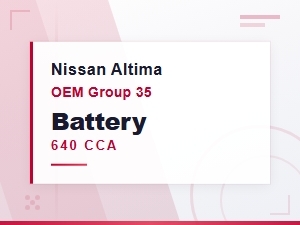
Most Nissan Altima model years from 2002 through 2024 use a Group 35 battery. This is the standard BCI (Battery Council International) classification that defines the battery's physical dimensions, terminal placement, and power specs. A Group 35 battery measures approximately 9.06 x 6.88 x 8.75 inches, with the positive terminal on the right side.
Some older Altima trims and engine configurations may vary slightly, so it's worth confirming the exact fit for your year. You can check the full battery group size specifications for the Nissan Altima to match your specific model year and engine.
Why does hot climate change which battery you should buy?
Here's what most people don't think about: heat kills batteries faster than cold does. Cold weather makes starting harder, but heat actually damages the battery internally. When temperatures under the hood regularly exceed 140°F, the electrolyte inside the battery evaporates faster, internal corrosion accelerates, and the battery's overall lifespan drops significantly.
A battery that lasts four to five years in a moderate climate like Seattle or Chicago might only survive two to three years in places like Tucson or Houston. That's why choosing the right Nissan Altima battery group size for hot climate driving isn't just about the group number it's about picking the right type and construction within that group.
What happens to batteries in extreme heat?
- Water loss High temperatures cause the liquid electrolyte to evaporate, especially in traditional flooded batteries. Once the fluid drops below the plates, the battery can't hold a charge properly.
- Grid corrosion The lead plates inside the battery corrode faster in heat, weakening the battery's ability to deliver power over time.
- Faster self-discharge A hot battery loses its charge sitting on the shelf or in the car more quickly than one in cooler conditions.
- Thermal runaway risk In extreme cases, excessive heat can cause the battery to overcharge or even swell, which is a safety concern.
Should you pick an AGM or flooded battery for a hot climate Altima?
For hot climate driving, an AGM (Absorbent Glass Mat) battery is the better choice within the Group 35 category. AGM batteries are sealed, so the electrolyte doesn't evaporate the way it does in traditional flooded batteries. They handle heat cycling better, resist vibration, and hold their charge longer when the car sits unused in the heat.
Flooded (wet cell) batteries cost less upfront, but in a hot climate, you'll likely replace them more often. Over a five-year period, buying two cheaper flooded batteries can end up costing more than one quality AGM that lasted the whole stretch.
What about EFB batteries?
EFB (Enhanced Flooded Battery) sits between standard flooded and AGM in both price and heat resistance. For Altimas without start-stop technology, EFB is a decent middle ground if you want better heat tolerance without paying AGM prices. But for the harshest climates, AGM still wins on longevity.
What cold cranking amps do you need in a hot climate?
This sounds counterintuitive, but you still want a battery with solid cold cranking amps (CCA) even in hot weather. CCA ratings tell you how much power the battery can deliver at startup. A Group 35 battery typically ranges from 500 to 750 CCA depending on the brand and type.
In a hot climate, you don't need the highest CCA number on the shelf, but you want at least 640 CCA for a reliable start. Going below that for a 2.5L or 3.5L Altima engine, especially as the battery ages, risks slow or failed starts.
The more important spec in hot weather is actually reserve capacity (RC) how long the battery can run essential systems if the alternator fails. Higher RC gives you more margin in the heat. Look for a Group 35 battery with at least 100 minutes of RC.
Which Group 35 battery brands handle heat best?
Not all Group 35 batteries are built the same. Some brands use thicker plate construction, better separators, and more durable casing materials that resist heat damage. Here are brands that have a solid reputation for hot climate performance:
- Optima Yellow Top AGM design with spiral-cell technology. Handles extreme temperatures well and has a strong vibration resistance. Popular in the Southwest for good reason.
- Odyssey Extreme Series (35-PC1400T) Pure lead AGM with high RC ratings. More expensive, but lasts significantly longer in heat.
- ACDelco 35AGM Reliable AGM option with good heat tolerance at a more moderate price point.
- Interstate MTP-35 A solid flooded option if you go the non-AGM route. Known for consistent performance and wide availability.
- DieHard Platinum AGM (Group 35) Another AGM pick with strong reserve capacity and heat endurance.
If you want a detailed breakdown on where to purchase these, the buying guide for Group 35 batteries for the Nissan Altima covers pricing and availability options.
How often should you replace a battery in a hot climate?
If you live in a consistently hot area, plan on replacing your Altima's battery every 2 to 3 years even if it seems fine. Most batteries in hot climates start degrading internally long before they show obvious signs of failure. Waiting until the battery dies often means dealing with a no-start situation at the worst possible time.
Here's a practical replacement schedule based on battery type in a hot climate:
- Standard flooded battery Replace every 2 years. Don't push it past 30 months.
- EFB battery Replace every 2.5 to 3 years.
- AGM battery Replace every 3 to 4 years. Some premium AGMs can stretch to 4.5 years with good maintenance.
What are common mistakes people make replacing an Altima battery in hot areas?
Plenty of Altima owners make the same avoidable errors when buying a new battery for a hot climate. Here's what to watch out for:
- Buying the cheapest battery available A budget flooded battery in Phoenix is a recipe for repeated replacements. Spending an extra $40 to $70 on an AGM pays off fast.
- Ignoring the battery's manufacture date Batteries start degrading from the moment they're made. If the battery on the shelf is already 8+ months old, ask for a fresher one. The date code is usually stamped on the case.
- Skipping the battery hold-down Vibration accelerates damage, and loose batteries bounce around more. Always secure the hold-down clamp properly.
- Not checking the charging system A failing alternator or voltage regulator can overcharge the battery, which is especially dangerous in hot weather. Get the charging system tested when you install a new battery.
- Using the wrong group size Some owners grab a Group 24F or Group 34 because it "looks close enough." Wrong group size means wrong terminal placement, wrong fit, and potential electrical issues. Stick with Group 35.
For a full comparison of the recommended options, check the recommended battery group size guide for the Nissan Altima.
Can you extend battery life in a hot climate?
You can't change the weather, but a few habits can add months or even a year to your battery's life:
- Park in the shade or a garage whenever possible. Keeping the engine bay temperature lower directly reduces battery stress.
- Use a battery insulator or heat shield these are inexpensive sleeves that wrap around the battery and reflect engine heat. They cost $10 to $20 and make a real difference.
- Keep terminals clean Corrosion builds faster in heat. Clean the terminals with a wire brush and apply anti-corrosion grease or felt pads.
- Drive regularly Short trips and long periods of sitting allow the battery to discharge and sulfates to build on the plates. Take a 20+ minute drive at least once a week to keep it charged.
- Use a trickle charger If the Altima sits for more than a week, connect a smart trickle charger or battery maintainer to keep it topped off without overcharging.
What are the signs your Altima's battery is failing in the heat?
Hot climate battery failure often sneaks up on you. Look for these early warning signs:
- Slow engine crank The starter sounds sluggish or labored, especially after the car has been sitting in the sun.
- Dim headlights at idle This can point to both battery and alternator issues, but in hot climates it's often the battery weakening.
- Swollen or warped battery case If the sides of the battery look bowed out, it's been overcooked. Replace it immediately.
- Check engine light or electrical glitches Random warning lights, flickering dashboard displays, or erratic power window behavior can all signal voltage drops from a dying battery.
- Battery is more than 2 years old in a hot climate Even without symptoms, a flooded battery past the two-year mark in extreme heat is living on borrowed time.
Quick checklist before buying your next Altima battery
Use this checklist to make the right purchase the first time:
- ✅ Confirm your Altima's year, engine size, and trim Group 35 fits most, but verify first
- ✅ Choose AGM if you live in a consistently hot area (above 90°F for 3+ months)
- ✅ Look for at least 640 CCA and 100 minutes of reserve capacity
- ✅ Check the manufacture date reject batteries older than 6 months
- ✅ Buy from a retailer with a good warranty (3+ years for AGM is ideal)
- ✅ Pick up a battery heat shield or insulator sleeve while you're at it
- ✅ Ask the store or mechanic to test your alternator output at the same time
- ✅ Keep your receipt and register the warranty some brands require online registration for full coverage
Taking 10 minutes to get the right Group 35 battery for your climate saves you from dealing with a dead Altima on a 110°F afternoon. Don't wait for the warning signs if your battery is already two years old and you're in a hot region, start shopping now before it leaves you stuck. Style details matter too in your garage projects even Oswald font is a solid pick for clean-looking car maintenance labels.
 Nissan Altima Battery Group Size Specs: Complete Buying Guide by Model Year
 Best Battery Group Size for 2005 Nissan Altima: Complete Buying Guide
 Where to Buy a Group Size 35 Battery for Your 2005 Nissan Altima
 Best Long-Lasting Battery Group Size for 2005 Nissan Altima - Buying Guide
 Nissan Altima Battery Size and Replacement Instructions Guide
 Nissan Altima Oem Battery Group Size and Cca Rating Guide